
Maple syrup looks simple in the jug. Getting it there is a short-season, long-day kind of work. Here's how it goes, from tree to table, on a family farm in Erieville, New York.
Late Winter, Early Spring
Maple season doesn't wait for a convenient weekend. It shows up in late winter and early spring, when the nights are still cold and the days finally warm enough to get the sap moving. For a little while, the woods are awake and the sugarhouse is too. Then the window closes, and the year's maple is the year's maple.
From the Trees
What comes from a maple tree is sap, thin and barely sweet, and a long way from the syrup you pour on pancakes. It takes a lot of it. At Swiss Mountain Farms, about 87,000 to 90,000 gallons of sap a year become roughly 1,800 gallons of syrup, which is close to 50 gallons of sap for every gallon in the jug. The family started in 2022 with 50 taps and now taps roughly 4,000 trees across about 40 acres of the 80 they own. That is why a good run matters and why the tanks fill faster than you might expect.
Into the Tanks
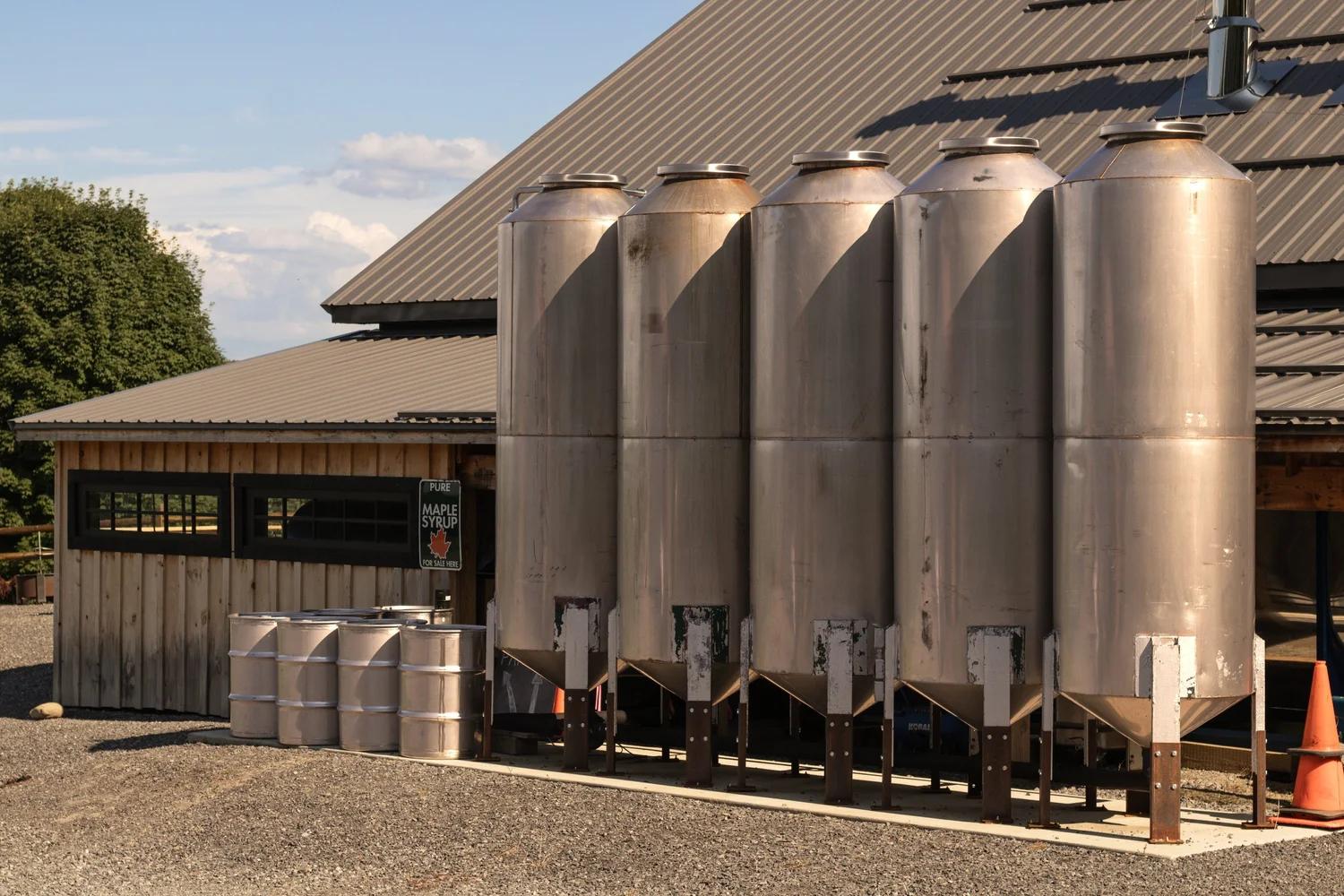
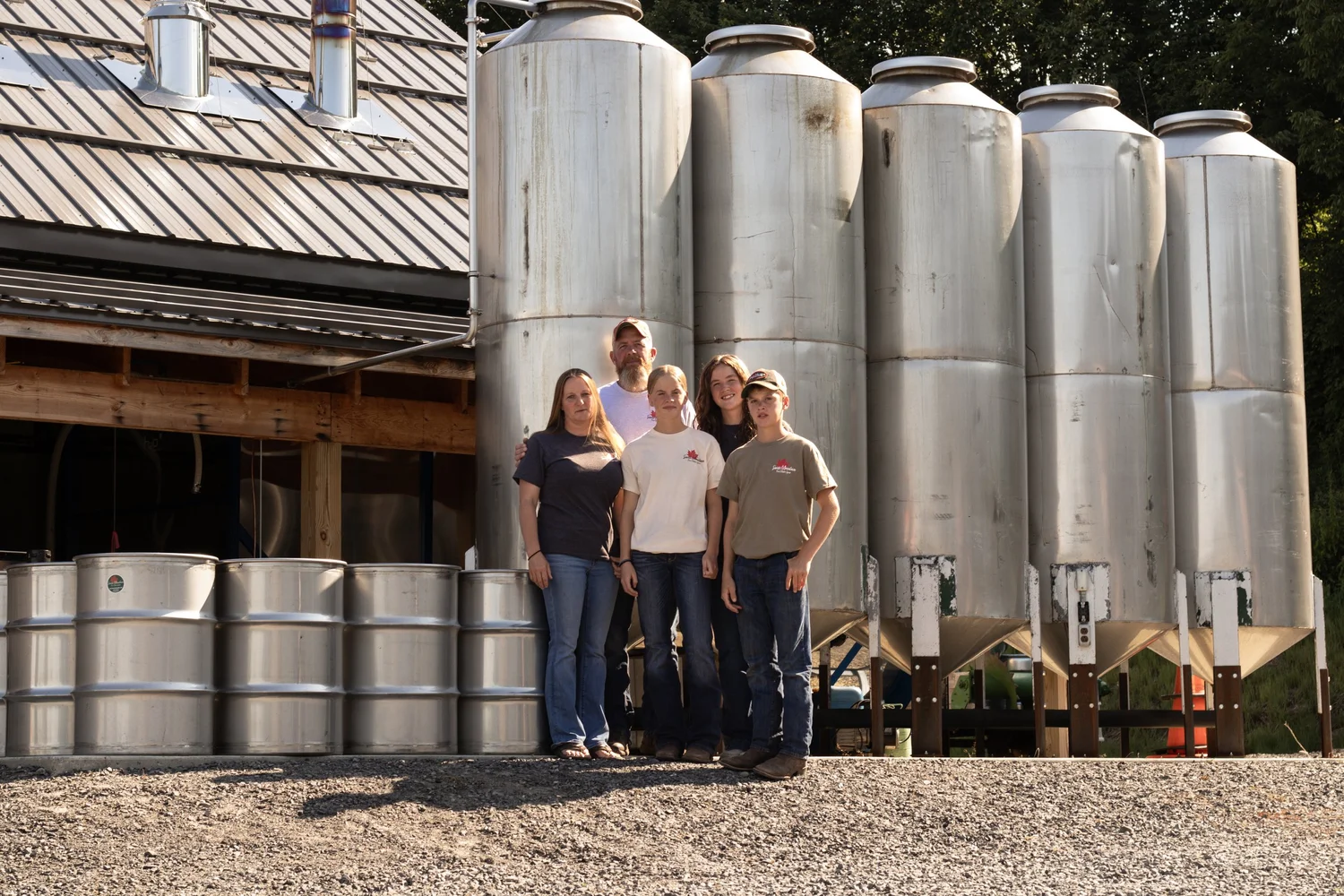
Once the sap is collected, it needs a place to wait its turn. At Swiss Mountain Farms, that place is a row of stainless sap tanks beside the sugarhouse. They are not there for show. They are the holding line between the woods and the boil, keeping the sap ready until it can be turned into something you can put in a jug.
Boiled Down
This is the part most people picture when they think of maple: steam in the sugarhouse, and sap cooked down until it thickens, darkens, and starts to smell like the real thing. Maple syrup is sap, boiled until most of the water is gone and what remains is concentrated maple. There is no mystery ingredient. Time, heat, and a careful eye do the work. At Swiss Mountain Farms the fire is wood, all the way, which is slower and takes more tending, and which we would not trade.
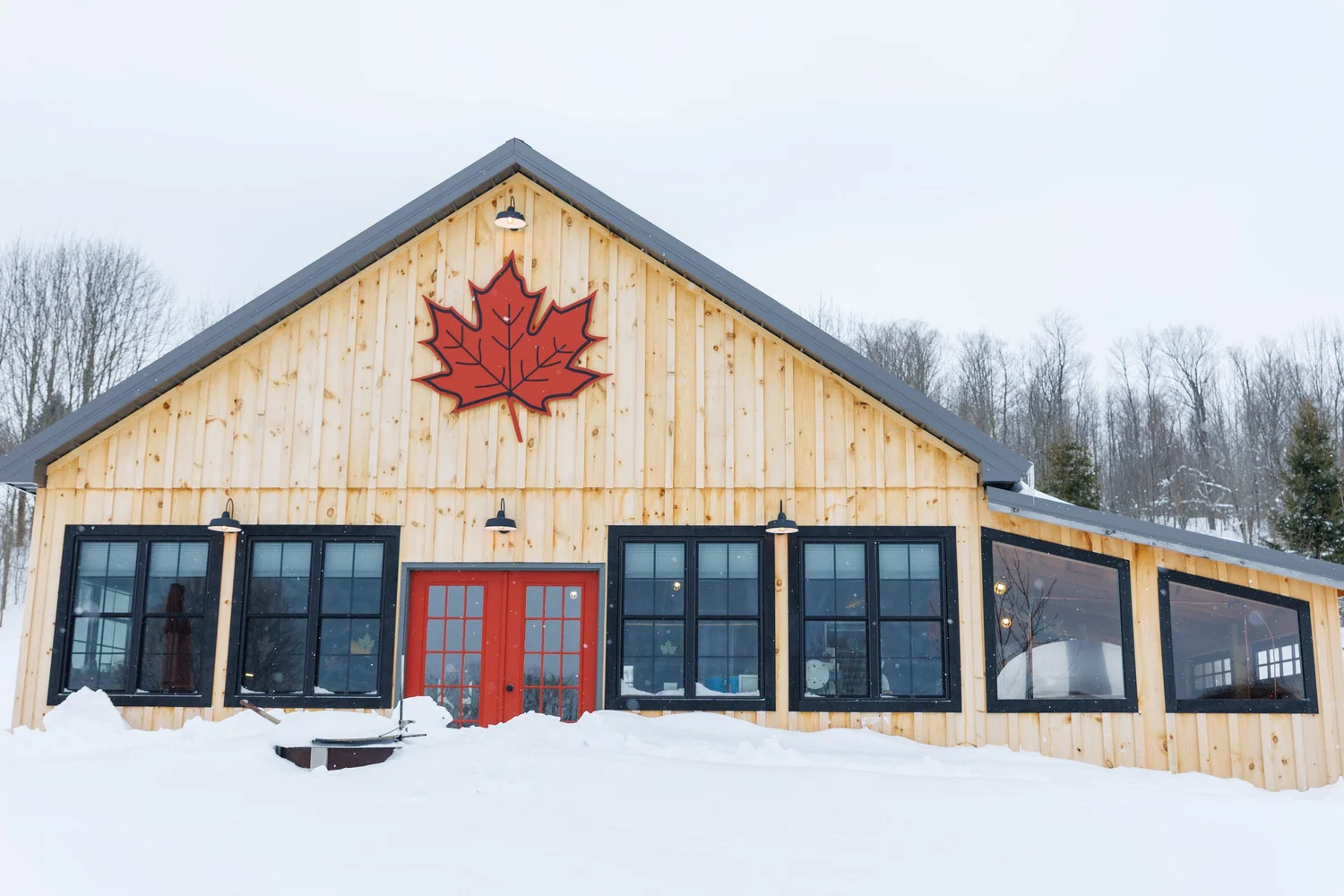
On a snowy day the sugarhouse looks almost still from the outside. Inside, it is a different story.
From the Sugarhouse to the Jug
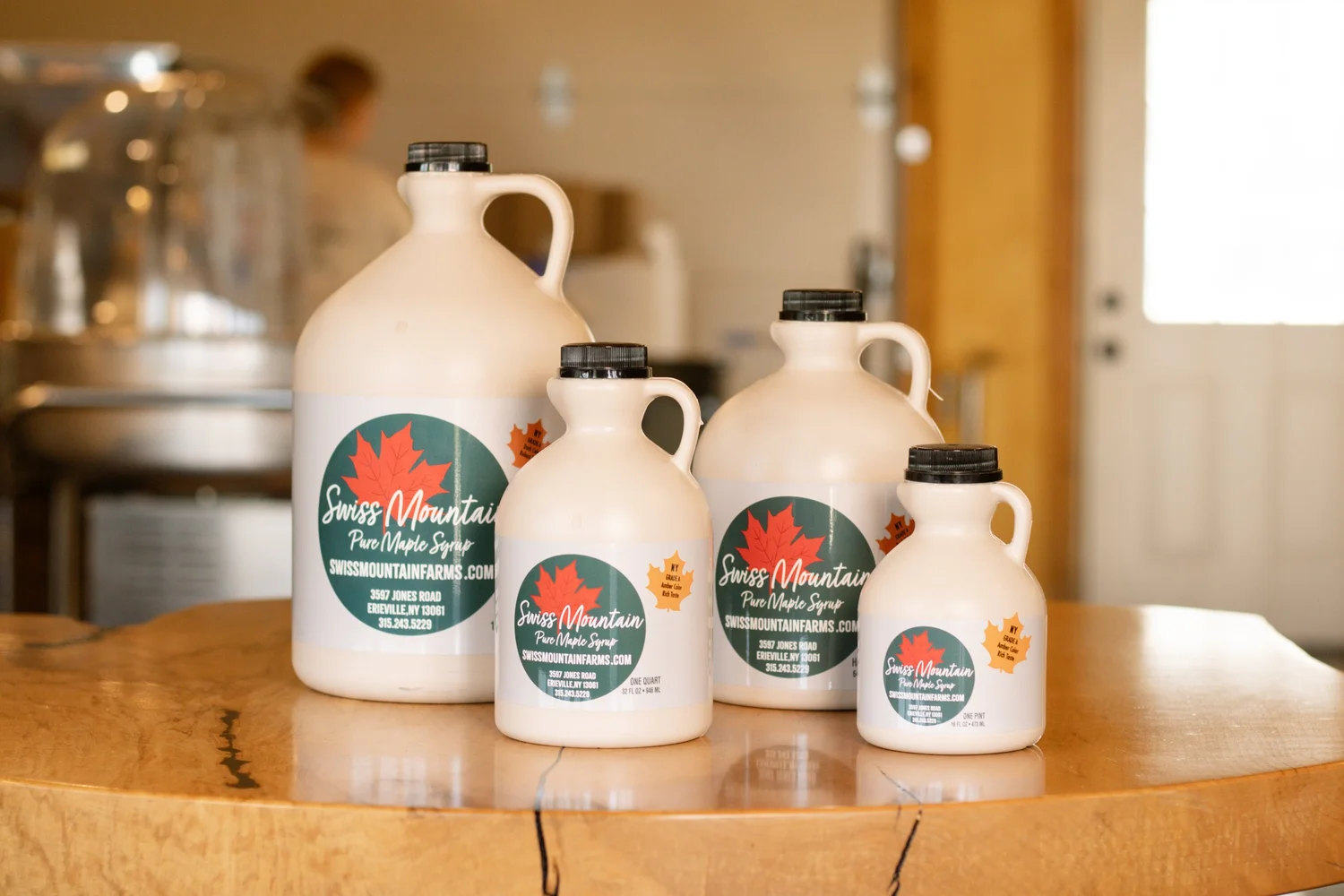
When the syrup is ready, it is packed and sent out into the world — into everyday jugs for the pancake table and glass jugs for the shelf, along with the other bottles the year calls for. At Swiss Mountain Farms, a typical year means about 1,800 gallons of maple syrup. And they sell every last drop.
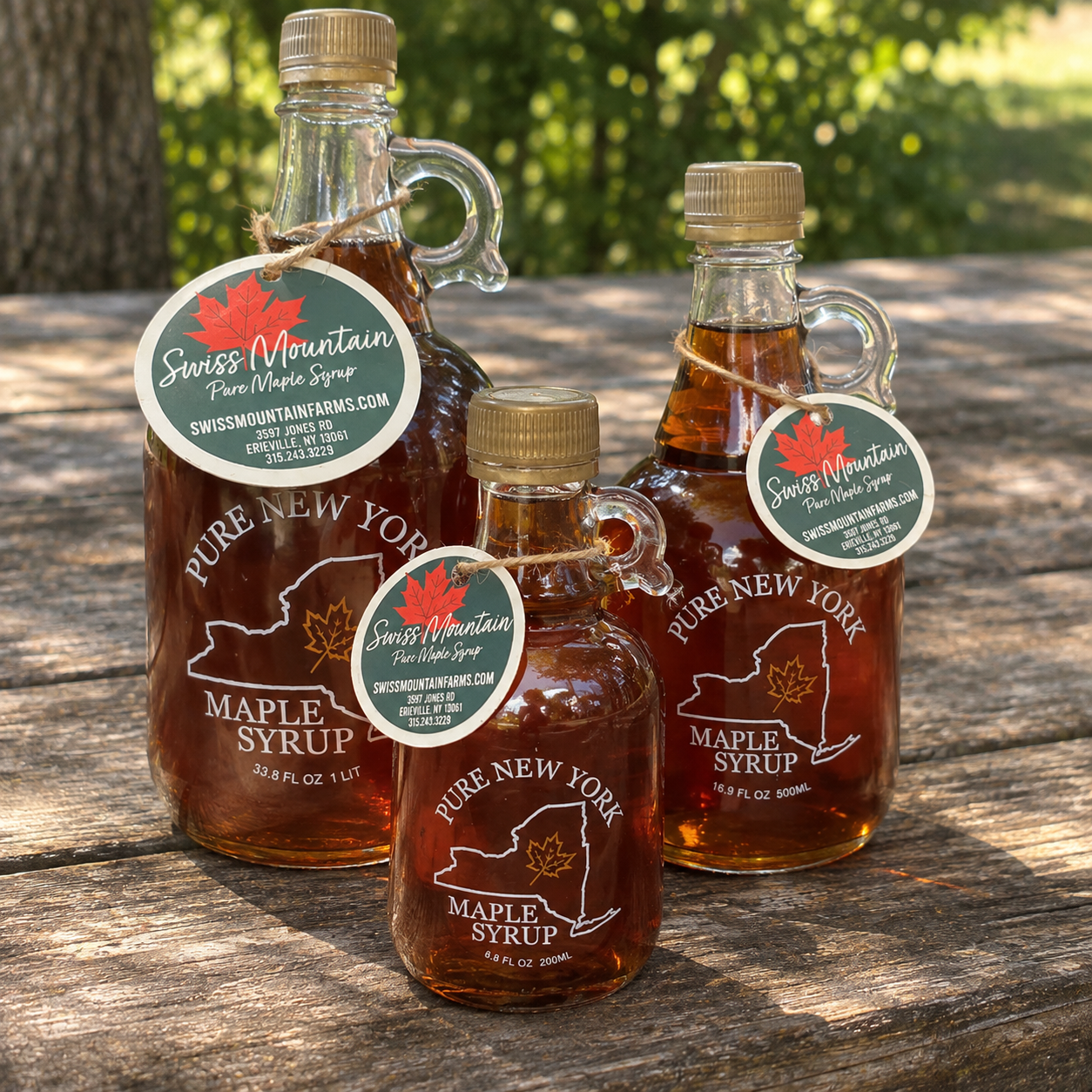
That is the whole arc, start to finish: a late-winter thaw, a lot of sap, a serious boil, and a jug that does not last long in a good kitchen. If you've ever wondered why real maple tastes the way it does, this is why. It had to travel from a tree, through a tank, through the sugarhouse, and into a bottle — and a family in Erieville was there for every step.
Want to see the people behind the boil? Read Meet the Family Behind Every Last Drop, or shop the jugs.